The Timeless Allure of French Cut Diamonds

What Are French Cut Diamonds

The Timeless Allure of French Cut Diamonds

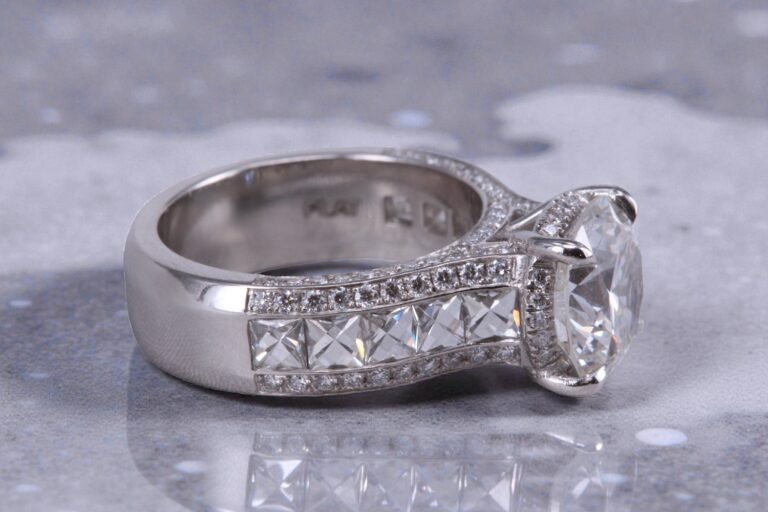
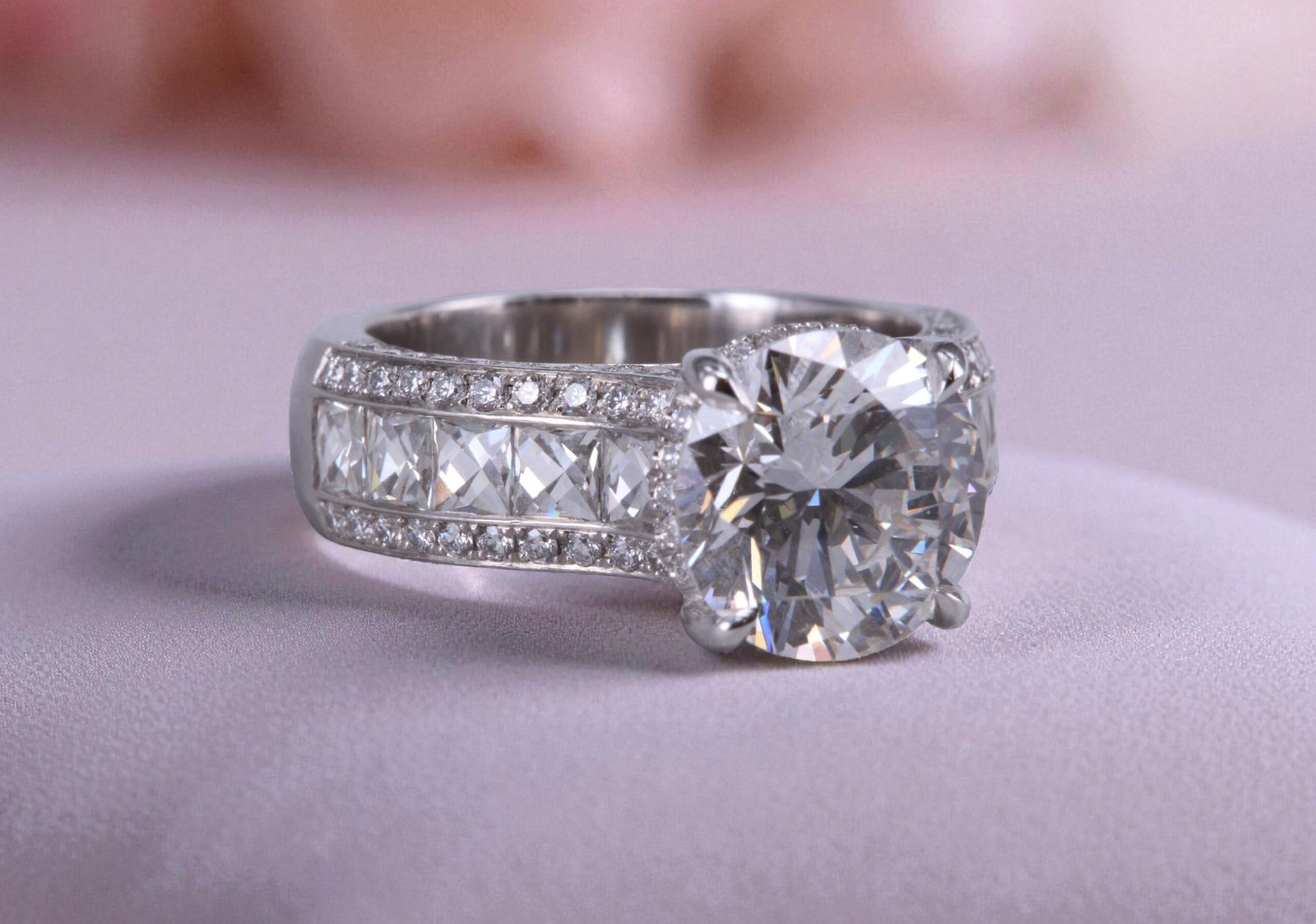
Seen above: A couture custom engagement ring by Carl Blackburn, featuring a round-brilliant center diamond, framed by a bold, double-row band set with sleek French cut diamonds, accented by delicate pavé along the edges. The design blends crisp geometry with radiant sparkle for a refined, vintage-inspired look.

French cut diamonds belong to a rare category of gemstone artistry that has survived for more than five centuries — and only because a small number of specialists are still capable of producing them. Unlike brilliant-cut stones, which are optimized for modern machinery, French cuts must be shaped and faceted primarily by hand. Their high crown, architectural symmetry, and signature “X” pattern across the table are notoriously difficult to execute. Matching several of them for a channel band or Art Deco halo is even harder.

Because of this complexity, very few jewelers in the United States work with French cuts on a regular basis. At C. Blackburn Jewelers in San Diego, we are proud to be one of the select studios that still source, match, and design custom jewelry with French cut diamonds and sapphires. This specialization allows us to create authentic Art Deco revival pieces, precise channel-set bands, and bespoke designs that honor the cut’s historic craftsmanship.

The rarity and difficulty of the French cut are exactly what make it so captivating — and why it continues to be favored by connoisseurs who value fine, handcrafted jewelry over mass-produced sparkle.

Origins in the Renaissance: The Birth of the French Cut

The French cut emerged during the Renaissance, a time when European lapidaries were beginning to explore ways of adding brilliance to diamonds. Its ancestor, the simple table cut, offered little fire. French artisans sought a way to create more reflective surfaces without disrupting the diamond’s natural structure.

The solution was a square cut with a high crown and faceting arranged in a cross pattern, a form that introduced far more visual life than earlier styles. The cut quickly became popular among the French and Burgundian courts, which favored structured, geometric designs.

Even in its earliest days, producing a French cut required skill and patience. It sacrificed more weight from the rough and demanded millimeter-level precision — traits that would follow it throughout its history.
San Diego Watch Buyers
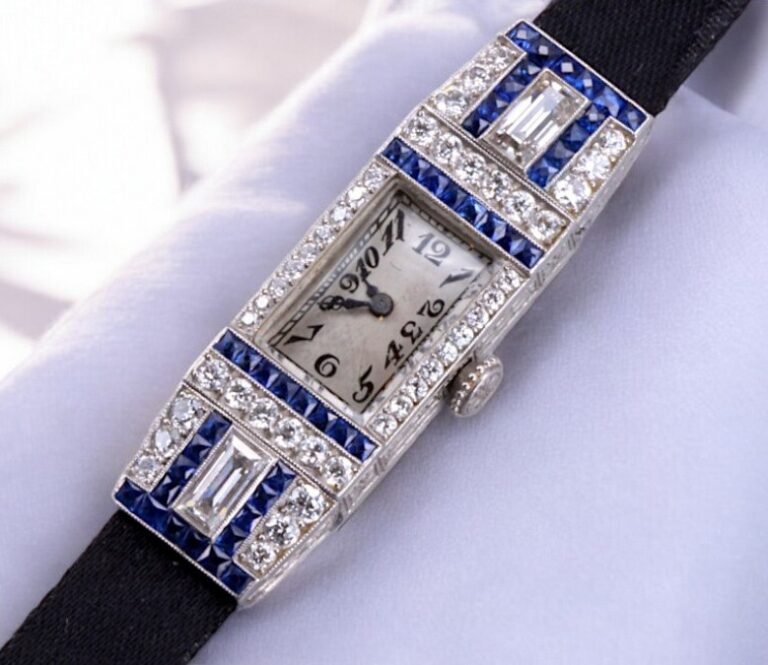
From C. Blackburn Jewelers: An antique platinum Cartier watch with diamonds & French Cut sapphires.
The 17th–19th Centuries: A Specialist’s Cut

As diamond cutting advanced, old mine cuts and early brilliants became more common, but the French cut never disappeared. Instead, it became a niche specialty used in:

  • Royal jewelry, where cutters needed perfectly matched stones

  • Rivière necklaces, featuring square, elegantly aligned diamonds

  • Ecclesiastical ornaments and aristocratic mourning pieces

  • Custom commissions, where symmetry mattered more than size


French cuts remained costly and labor-intensive, which elevated them to a luxury reserved for clients who appreciated the meticulous handwork involved.

Art Deco Brilliance: The Golden Age of the French Cut

The Art Deco period of the 1920s and 1930s transformed the French cut from a historical curiosity into a design icon. The geometric, architectural qualities of the cut aligned perfectly with the era’s aesthetic.

Legendary maisons such as Cartier, Tiffany, Van Cleef & Arpels, and Mauboussin frequently incorporated French cut diamonds and colored stones into their:

  • Channel-set eternity bands
  • Platinum cuff bracelets
  • Cocktail rings
  • Filigree brooches and dress clips
  • Watch bezels and geometric pendants


The cut’s straight edges allowed stones to sit flush in channels, creating flawless ribbons of light — something impossible to achieve with brilliant cuts. Deco jewelers also used French cut sapphires and rubies to frame diamonds in dramatic color contrasts that remain highly collectible today.

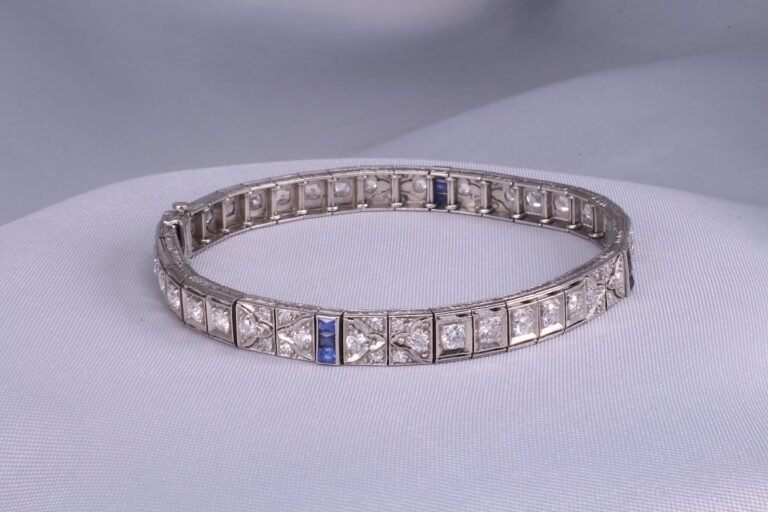
From C. Blackburn Jewelers: An antique Art Deco diamond line bracelet with French Cut sapphire accents.
Post-War Decline: When Efficiency Took Over

After World War II, jewelry manufacturing moved toward efficiency, uniformity, and higher yields from the rough. This shift made brilliant cuts far more economical and scalable.

French cuts, with their low yield and slow cutting process, became less practical. By the 1970s, only a handful of ateliers in Europe and New York were still producing them, largely for repair work on antique pieces.

For decades, it seemed the French cut might quietly fade from the industry.

The 21st-Century Revival: Craftsmanship Returns

Beginning in the early 2000s, collectors and designers sought a return to old-world craftsmanship. With that came a renewed appreciation for antique diamond cuts — old Europeans, old mines, rose cuts, and, notably, French cuts.

Today, French cuts are once again appearing in high-end custom pieces, where clients want something:

  • Historically authentic
  • Architecturally refined
  • Uncommon in mainstream jewelry
  • Crafted rather than mass-produced


At C. Blackburn Jewelers, we work directly with gemstone artisans who produce old French cuts by hand. These long-established partnerships allow us to create:

  • Art Deco–inspired halo rings
  • Channel-set bands with French cut diamonds or sapphires
  • Custom engagement rings with geometric side stones
  • Period-correct restorations of heirloom jewelry
  • Sapphire-and-diamond borders for colored stone centers


Because each stone is individually faceted, a French cut ring designed today carries the same handmade character as the pieces created a century ago.

The artisans who work with C. Blackburn Jewelers are among the few who have mastered the French Cut.
What Makes French Cuts Distinct Today

Modern French cuts retain their historical shape but benefit from more precise tools. They are prized for several unique qualities:

  1. Sculptural Geometry

Their clean planes and architectural symmetry create a bold yet elegant look.

  1. Soft, Luminous Glow

French cuts don’t sparkle like brilliants — they glow. Light moves across the broad facets in smooth waves, producing a refined inner radiance.

  1. Ideal for Channels

The straight edges make them perfect for seamless channel settings, a hallmark of Deco design.

  1. Rarity and Exclusivity

Few cutters produce them, which adds value and uniqueness to modern pieces.

  1. Perfect for Color Play

French cut sapphires and rubies remain the top choice for creating strong lines of color bordering a diamond center.

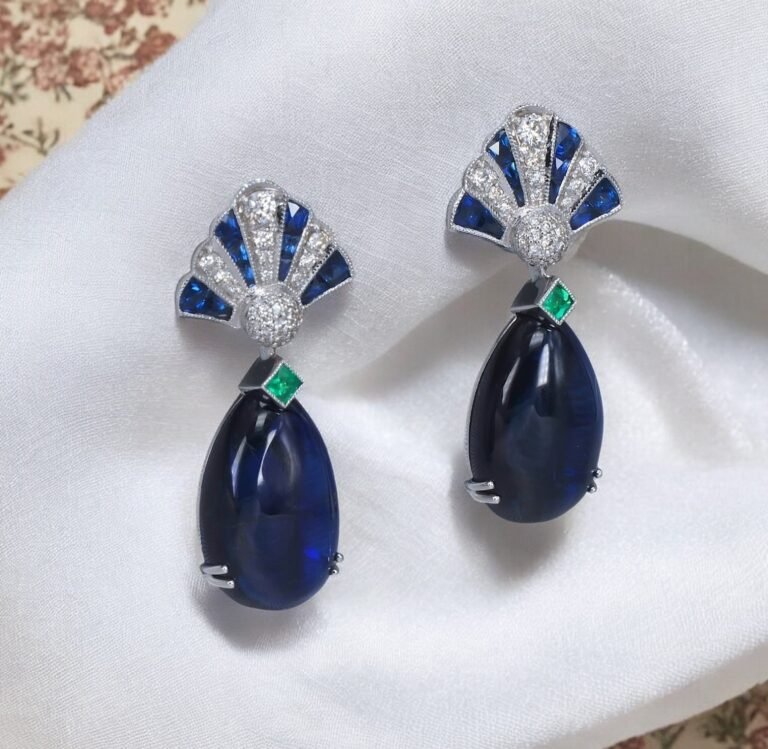
By Carl Blackburn: Custom kyanite earrings with diamonds & French Cut sapphires in the pattern.
Custom French Cut Diamond & Sapphire Jewelry in San Diego

French cut diamonds and sapphires appeal to clients who appreciate authenticity, craftsmanship, and history. They offer something profoundly different from mass-market jewelry: a sense of lineage. A French cut stone connects the wearer to centuries of artisan skill and timeless design philosophies that never go out of fashion.

At C. Blackburn Jewelers, we are committed to preserving this tradition. Whether you dream of a Deco-inspired engagement ring, a sapphire-and-diamond channel band, or a custom piece that blends old and new aesthetics, we can help you bring that vision to life with stones cut exactly as they were generations ago.

If you’d like to explore French cuts for your next piece, we welcome you to schedule a consultation with designer Carl Blackburn at our La Jolla jewelry store. Here, rare craftsmanship is still very much alive.

📞 Schedule your free design consultation.

Call 858-251-3006 or text 619-723-8589.
 

    Your Name (required)

    Your Telephone (required)

    Your Email (required)

    Your Message (required)