
04 Jan Confused by Diamond Specs? What Really Matters
If you’ve ever walked into an engagement ring showroom and felt like you needed a translator, you’re not alone. For many San Diego couples, diamond shopping quickly turns into a blur of unfamiliar terms: VS2 vs. SI1, table percentages, depth, fluorescence, millimeters instead of carats. You nod politely, but inside you’re thinking, “Am I about to make a very expensive mistake?”
This sense of confusion is one of the most common (and least talked about) pain points among engagement ring buyers. The joy of choosing a ring can quietly be replaced by anxiety: What actually matters? What can I safely ignore? And how do I know I’m not choosing the “wrong” diamond just because I don’t speak the language?
This is exactly the moment where a La Jolla custom jeweler like C. Blackburn Jewelers can step in — not as a salesperson, but as a guide.
Why the 4Cs Feel So Overwhelming
The “4Cs” (cut, color, clarity, and carat) are meant to simplify diamond grading. In practice, they often do the opposite. Each “C” comes with sub-categories, numbers, charts, and trade-specific shorthand. When all of that is delivered at once, it’s easy to feel lost.
Many first-time diamond ring buyers share the same frustration: sales staff who talk at them instead of with them. Technical specs are presented without context, leaving shoppers to wonder whether a VS2 clarity is “good enough,” or if a slightly deeper stone means they’re compromising quality. Online forums are full of basic questions like, “What do diamond dimensions actually mean?” — not because people are careless, but because no one has slowed down to explain.
This confusion can quietly undermine confidence. Instead of enjoying the process, ring buyers worry they’ll misunderstand one small detail and regret it for years.

What Actually Matters (And What Often Doesn’t)
Here’s the reassuring truth that Carl Blackburn shares with clients: not every diamond spec deserves equal weight. Some characteristics have a major impact on how a diamond looks in real life; others are far less noticeable once the ring is on your hand.
For example, cut quality almost always has the biggest influence on the sparkle and beauty of an engagement ring. A well-cut diamond can look brighter and more lively than a larger stone with poor proportions. Yet cut is often rushed through, while clarity grades are over-emphasized.
Many buyers fear that anything below the highest clarity grades means visible flaws. In reality, numerous VS2 (and even some SI1) diamonds are completely “eye-clean,” meaning inclusions aren’t visible without magnification. Paying more for microscopic perfection often doesn’t change how the ring looks day to day.
Color follows a similar pattern. Small differences on a grading scale may be invisible once the diamond is set, especially in yellow or rose gold. Understanding these trade-offs is far more useful than memorizing charts.
It’s also worth noting that many buyers today are interested in lab-grown diamonds, which follow the same grading language as natural diamonds but differ in origin and pricing. When explained clearly, this option can give couples more flexibility — allowing them to prioritize size, cut quality, or even fancy color without increasing their budget.
Fancy Colored Diamonds:
When “Color” Means Something Else Entirely
One area that often adds to buyer confusion is when shoppers hear about fancy colored diamonds. This is where many people assume things are getting even more complicated. But in reality, it can be quite the opposite.
With traditional white diamonds, “color” refers to the absence of color. Subtle differences between grades (D through J, for example) can feel abstract and hard to visualize. Fancy colored diamonds work on a completely different scale. Here, color is the feature, not the flaw. Yellows, pinks, blues, and other natural hues are evaluated for their intensity and character, not how close they are to colorless.
For some couples, this is a revelation. Instead of chasing tiny, technical distinctions, they’re choosing a diamond because it feels expressive, personal, or simply beautiful to them. In many cases, a well-chosen fancy colored lab-grown diamond can offer exceptional value, allowing buyers to prioritize the visual impact and uniqueness of their engagement ring over textbook perfection.
This is another area where guidance matters. Understanding whether a subtle champagne tone natural diamond or lab-grown icy blue diamond fits your taste and budget requires explanation, not pressure. When presented clearly, fancy colored diamonds often simplify the decision rather than complicate it.
At C. Blackburn Jewelers, these options are discussed the same way as everything else: in plain language and with honest conversations about what you’re actually paying for.
Education Builds Confidence, Not Pressure
Luxury doesn’t have to mean intimidation. People appreciate when a San Diego jeweler respects their intelligence without overwhelming them. Taking time to answer any and all questions about diamonds and colored gemstone alternatives like saphire, morganite, and aquamarine.
Couples who’ve had this kind of guidance often describe it as a turning point. Instead of feeling “dumb” for asking questions, they feel at home. They begin to understand why one option fits their priorities better than another, and that clarity brings relief.
At C. Blackburn Jewelers, education isn’t a sales tactic. It’s part of the custom engagement ring design process. Working directly with Carl Blackburn, clients are walked through diamond options within their real budget, not an abstract ideal. The conversation focuses on what will actually matter to you: how the ring looks, how it fits your lifestyle, and how comfortable you feel with the decision.
Transparency as a Competitive Advantage
Many engagement ring shoppers in San Diego quietly worry about being taken advantage of. When jargon is used as a shield, it’s hard to tell whether advice is truly in your best interest. At C. Blackburn Jewelers we eliminate such concerns.
Explaining why one diamond offers better value than another, even if it costs less, builds trust. Showing stones under magnification and then stepping back to view them as they’ll be worn bridges the gap between theory and reality. Over time, this transparency turns your uncertainty into confidence.
For our clients, that confidence is priceless. It allows them to choose a ring based on understanding rather than fear.
A Better Way to Choose a Diamond
If you’ve ever wished someone would simply tell you what matters most (and answer your questions without judgment) you’re not asking for too much. You’re doing the right thing.
That’s why many couples choose to schedule a private diamond education session with Carl Blackburn at C. Blackburn Jewelers in La Jolla. These relaxed, pressure-free meetings are designed to help you learn at your own pace, compare real options within your budget, and leave feeling informed rather than overwhelmed.
Choosing an engagement ring should feel exciting, not stressful. With the right guidance, you don’t need to “speak diamond” to make a beautiful, confident choice. You just need a custom jeweler who speaks your language. Get in touch with Carl now.
📞 Call 858-251-3006 or text 619-723-8589.
Related La Jolla Jewelry Posts:
 Cushion Cut Diamond Engagement Rings: A Complete Guide
 Yellow Diamond Engagement Rings: A Complete Guide
 Pink Diamonds: An Engagement Ring Buyer’s Guide
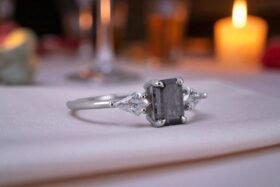 Carl Blackburn: Modern, In-Trend Engagement Ring Designs
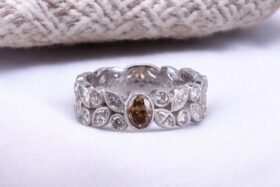 The Charm of Fancy Brown Diamond Rings & Jewelry
 La Jolla Fine Jewelry Glossary & Shopping Tips