26 Jan San Diego Lab-Grown Diamonds: What You Need to Know
Lab-grown diamonds have become one of the most common questions we field from San Diego couples shopping for an engagement ring. They offer the beauty and brilliance of a natural stone at a fraction of the price — but “lab-grown” still confuses a lot of buyers, who aren’t always sure what they’re actually getting.
At C. Blackburn Jewelers in La Jolla we are known for selling the finest natural diamonds, including antique cut stones. However, we are knowledgeable about lab-grown diamonds too, and offer them as an alternative choice to our clients.
Here’s what lab-grown diamonds actually are, how they compare to natural stones, and what to know about pricing and certification before you buy.
What Are Lab-Grown Diamonds?
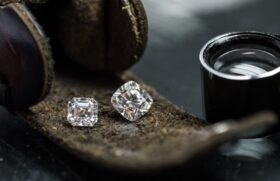
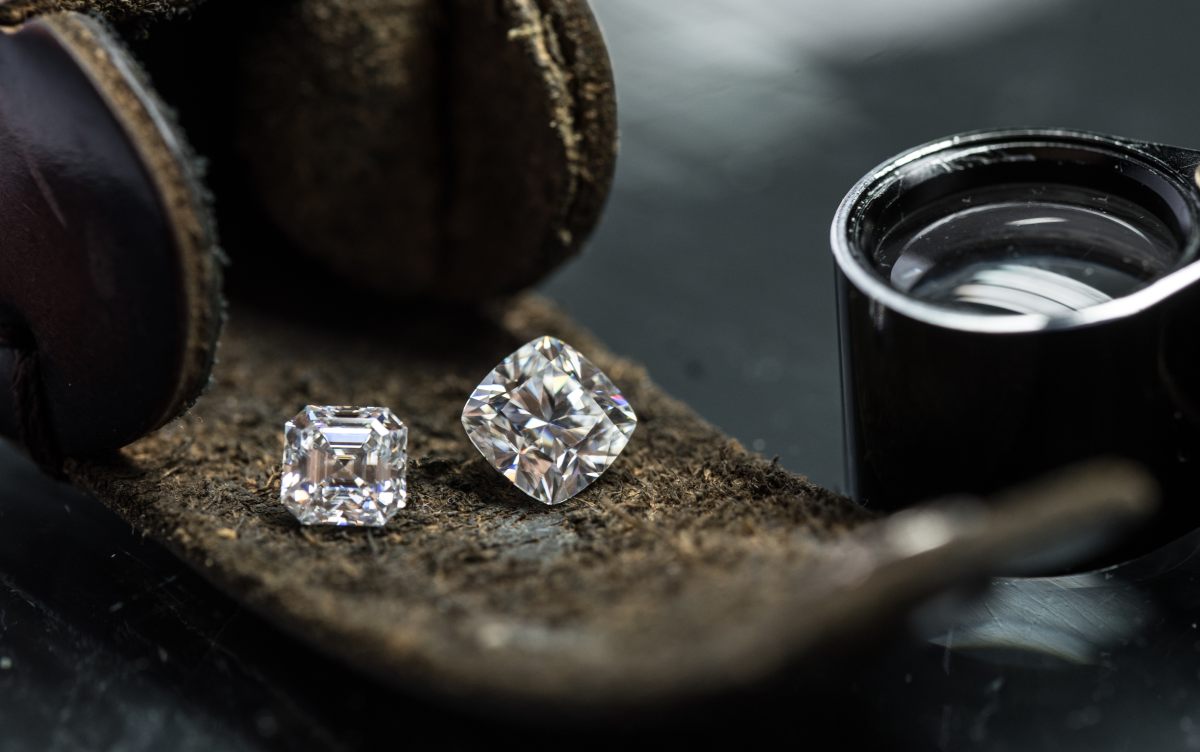
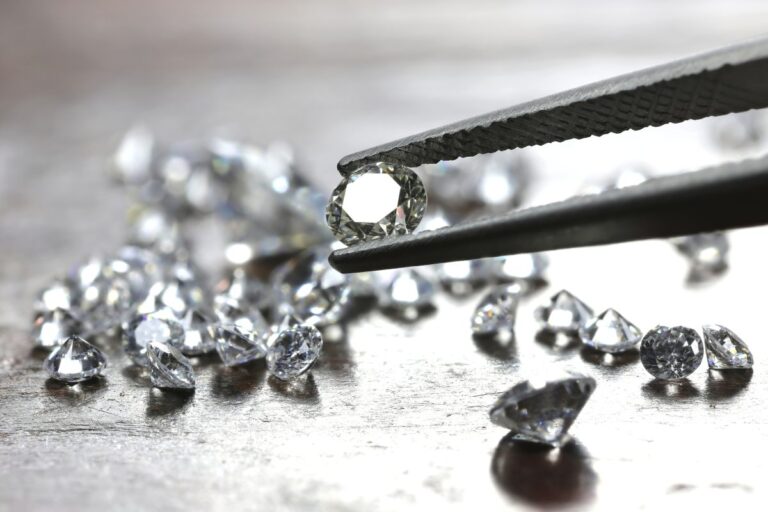
Lab-grown diamonds — also called synthetic or cultured diamonds — are created in a laboratory using technology that mimics the conditions under which natural diamonds form. They share the exact same chemical composition and crystal structure as natural diamonds, so a jeweler can’t tell them apart by eye or under a standard loupe.
The only real difference is origin: one forms in a controlled lab setting, the other deep in the Earth’s mantle over millions of years.
That’s worth distinguishing from diamond simulants like cubic zirconia or moissanite, which some San Diego jewelry stores also sell. Simulants only resemble diamonds visually — their chemical makeup and physical properties are different.
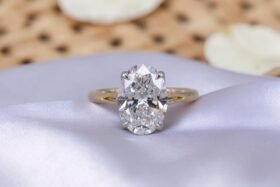
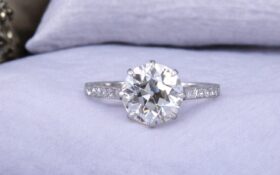
Lab-grown diamonds are real diamonds, with the same hardness, brilliance, and durability as natural ones, which is why San Diego jewelry designers such as Carl Blackburn (who don’t work with diamond simulants) will set a custom engagement ring with a lab-grown diamond to interested customers.
Lab-Grown vs. Natural: The Real Differences
Origin and formation time. Natural diamonds form under extreme heat and pressure over millions of years. Lab-grown diamonds are produced through chemical vapor deposition (CVD) or high-pressure, high-temperature (HPHT) methods, taking weeks to months rather than millennia.
Clarity. Natural diamonds often carry inclusions and blemishes that are treated as unique identifying characteristics. Lab-grown stones tend to come out cleaner, since the growth environment is far more controlled — though they can still have inclusions of their own.
Price — and where it’s headed. This is where the two markets have diverged sharply. Lab-grown diamond prices fell roughly 65–70% between 2020 and 2024 as production technology matured and supply expanded. That freefall has since slowed: as of 2026, prices are down only a couple of percent year over year, suggesting the market has settled near actual production cost rather than continuing to collapse.
Today, a lab-grown diamond typically runs 80–85% less (at C. Blackburn Jewelers, 90% less) than a comparable natural stone — a 1-carat, good-quality natural diamond might run $4,000–$6,000, versus roughly $800–$1,500 for its lab-grown equivalent. Natural diamond prices, meanwhile, have stabilized after a smaller pullback from their 2022 peak.
One trade-off worth knowing about upfront: lab-grown diamonds hold their resale value poorly, typically only 10–40% of the original purchase price on the secondary market. That’s not unique to lab-grown stones — diamonds in general are a poor investment vehicle — but it’s worth setting expectations if resale value factors into your decision.
For most couples, the appeal isn’t resale, it’s being able to afford a larger or higher-quality stone for the same budget.
Local pricing also varies more than people expect. Prices for a lab-grown diamond engagement ring can differ significantly among San Diego jewelry stores, with local jewelers often offering far better prices for a lab-grown diamond engagement ring than big online retailers like Blue Nile.
How Lab-Grown Diamonds Are Made
There are two production methods in use today, and both are used by lab-grown diamonds sold at jewelry stores in La Jolla and San Diego.
Chemical vapor deposition (CVD): A diamond seed sits in a sealed chamber filled with carbon-rich gas. Heating the gas causes carbon atoms to separate and deposit onto the seed layer by layer, gradually building a larger stone over several weeks to months.
High-pressure, high-temperature (HPHT): A diamond seed is placed under intense heat and pressure, replicating the conditions found in the Earth’s mantle. Carbon atoms crystallize and bond around the seed, though the process generally moves faster than CVD.
Both methods produce diamonds that are visually and chemically indistinguishable from natural ones.
Certification: What to Look For
Any lab-grown diamond you’re considering should come with an independent grading report covering cut, color, clarity, and carat weight — the same standards used for natural stones.
The International Gemological Institute (IGI) is the certifier most commonly seen on lab-grown diamonds, though GIA (Gemological Institute of America) has also expanded its lab-grown grading services in recent years and is worth asking about as an alternative. Skip any lab-grown diamond sold without third-party certification, regardless of price.
Who’s Buying Lab-Grown Diamonds
The shift toward lab-grown has been fast. Industry estimates put the global lab-grown diamond market at roughly $30 billion in 2026, with continued double-digit annual growth projected through the end of the decade as production technology keeps improving and awareness spreads.
Younger buyers — particularly millennial and Gen Z shoppers — have driven most of that growth, drawn by the combination of lower cost and (for many) the appeal of a stone that doesn’t come from mining.
It’s also worth noting that lab-grown diamonds aren’t only an engagement-ring story anymore: the same production technology is increasingly used for industrial and precision-tool applications, which is part of what’s kept manufacturing investment flowing into the space even as jewelry prices have fallen.
That growth is another reason you’ll find lab-grown diamond engagement rings being sold by San Diego jewelry stores who do not sell inexpensive simulants like cubic zirconia.
How to Buy a Lab-Grown Diamond in San Diego
A few things matter more than others when you’re shopping:
Work with an established, reputable jeweler. Look for a track record in the San Diego market and ask directly whether their lab-grown stones are certified by IGI, GIA, or another recognized lab.
Compare pricing across sources, including other San Diego jewelry stores and online retailers like Brilliant Earth, before settling on a stone. Given how much prices vary by retailer, this step alone can save a meaningful amount.
Think about the setting, not just the stone. Lab-grown diamonds can be set in any metal or style, so the design should still reflect your taste, not just your budget.
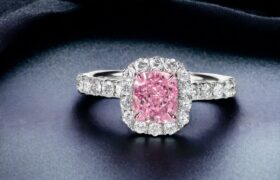
Many couples choose to save money on a lab-grown diamond so they can more readily afford a unique custom designed engagement ring from a San Diego jewelry designer like Carl Blackburn at C. Blackburn Jewelers in La Jolla.
Contact C. Blackburn Jewelers in La Jolla to discuss lab-grown diamonds and begin creating the custom engagement ring you’ve been dreaming of.
📞 Call 858-251-3006 or text 619-723-8589.