09 May Lab Grown vs. Natural Diamonds: A Conversation
There’s a moment in almost every custom engagement ring consultation where the question comes up — sometimes tentatively, sometimes urgently: should we go lab-grown or natural?
And right behind it sits a quieter one: what will people think?
If you’ve been turning both questions over, you’re not alone, and you’re not overthinking it. This has become one of the more emotionally loaded decisions in jewelry — not because the science is complicated, but because a diamond is rarely just a stone.
It’s tied up in symbolism, family history, and values you may not have had to articulate until you were standing in front of a case deciding.
At C. Blackburn Jewelers in La Jolla, designer Carl Blackburn has sat across the table from couples on every point of this spectrum. His take, after years of these conversations: there’s no wrong answer, but there’s a lot to sort through to get to the right one for you.
Is a Lab-Grown Diamond “Real”?
Let’s deal with the loaded word first: real.
A lab-grown diamond is, by every scientific measure, a diamond — pure carbon in the same cubic crystal structure as a mined stone, with identical hardness (10 on the Mohs scale), refractive index, and thermal conductivity. In fact, the FTC’s own definition of “diamond” no longer distinguishes by origin at all; it simply describes a mineral of crystallized carbon. Origin, not composition, is the only real difference.
That said, how diamonds get graded has recently diverged in an important way. As of October 2025, GIA — the industry’s most trusted lab — stopped issuing full D-to-Z color and clarity grades for lab-grown stones. Instead, lab-grown diamonds now receive a simplified “Premium” or “Standard” designation based on color, clarity, and finish, while natural diamonds continue to get the full traditional 4Cs report.
GIA’s reasoning: over 95% of lab-grown diamonds already land in a narrow band of high color and clarity, so granular grading wasn’t telling buyers much. It’s worth knowing about if you’re comparing certificates side by side — a “Premium” lab-grown report and a “D/VVS1” natural report aren’t reading off the same scale anymore, even though both come from GIA.
None of that changes the physical facts. A well-cut lab diamond will still outsparkle a poorly cut mined one, every time. When someone calls a lab-grown stone “fake,” they’re voicing a preference, not a fact.
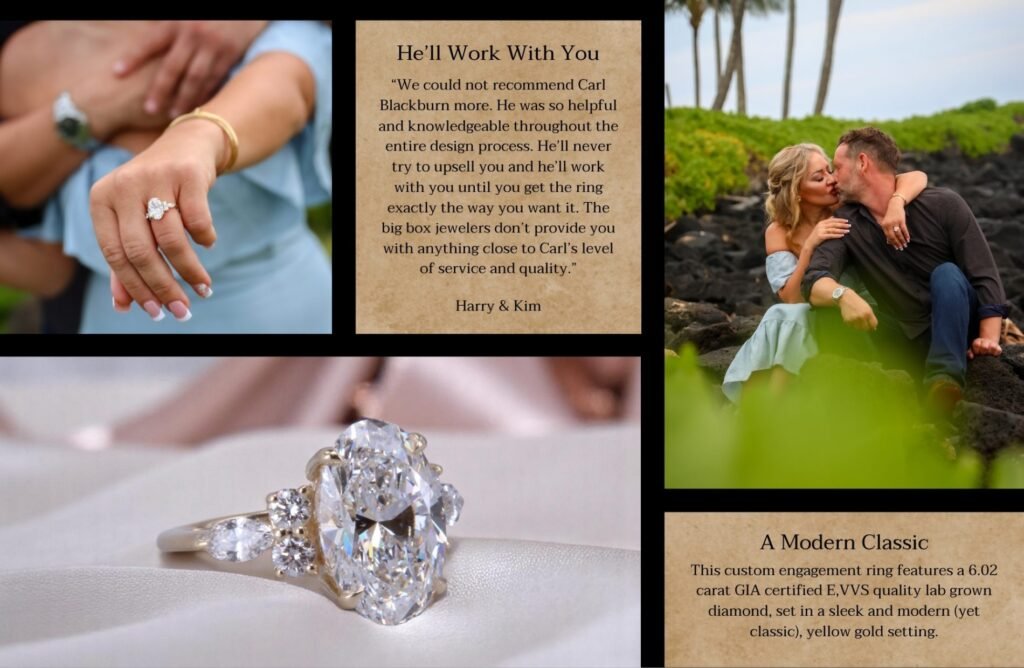
Why This Decision Feels So Personal
The ground has shifted fast. Buyers who got engaged even five or six years ago were choosing in a different landscape — lab-grown was still a niche option, and there was a real cultural assumption that only mined diamonds signaled serious commitment.
That assumption is mostly gone now. Lab-grown diamonds have gone from a rounding error in engagement ring sales a decade ago to the majority choice — recent industry surveys put lab-grown at somewhere over half of U.S. engagement ring center stones, with the numbers even higher among younger buyers.
Some of that is pure economics; some of it is ethics, as more couples ask harder questions about mining’s environmental and labor footprint.
But the emotional charge hasn’t fully faded. A parent who still equates “lab-grown” with “lesser.” A partner who hasn’t caught up on the science. A family tradition where the age and rarity of a mined stone carry real weight. Those feelings are just as legitimate as the ones driving the shift toward lab-grown — neither side of this is irrational.
The Case for Lab-Grown
More size and quality per dollar. The price gap between lab-grown and natural diamonds hasn’t just persisted — it’s widened considerably. Depending on the source and the specific quality grade, lab-grown diamonds now run somewhere in the range of 70–85% less (at C. Blackburn Jewelers, 90% less) than a comparable mined stone, and the gap tends to grow wider at larger carat weights.
Practically, that means a couple with a set budget can often land a noticeably larger, higher-clarity stone than mined diamonds would allow — which is a big reason the average lab-grown center stone has climbed toward 2.5 carats, roughly double what it was less than a decade ago.
A cleaner ethical story. Lab-grown sidesteps a lot of the supply-chain uncertainty that still trails the mined-diamond industry. For buyers motivated by that concern, knowing exactly how and where a stone was made offers a kind of certainty no sourcing story about a mined stone can fully match.
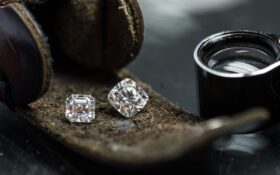
Nobody can tell by looking. Not a trained gemologist, not your future in-laws. Distinguishing lab-grown from mined requires specialized lab equipment — a standard loupe or diamond tester won’t do it.
The Case for Natural, Mined Diamonds
Deep time is hard to manufacture. A mined diamond began forming somewhere between one and three billion years ago, deep in the Earth, before being carried to the surface by volcanic activity. For a lot of people, that history — the sheer improbability of the object in front of them — is inseparable from what makes it meaningful. No lab timeline replicates that.
A more established resale market, though a modest one. Neither natural nor lab-grown diamonds should be thought of as investments — but natural diamonds have historically held resale value better, with estimates commonly landing somewhere in the 20–50% range of original purchase price, versus roughly 10–30% for lab-grown stones.
Natural diamond prices have also been comparatively stable over the past couple of years, while lab-grown prices have continued falling as production scales up — meaning a lab-grown stone bought today is likely worth meaningfully less on the resale market a few years out. If you think about a ring as something that might eventually be passed down, appraised, or sold, this is a real (if secondary) consideration.
Family and cultural meaning. Sometimes it really is that simple — a grandmother’s ring, a tradition that predates this whole debate, a partner for whom “mined” just means something. That’s not something a chart of price-per-carat should override.
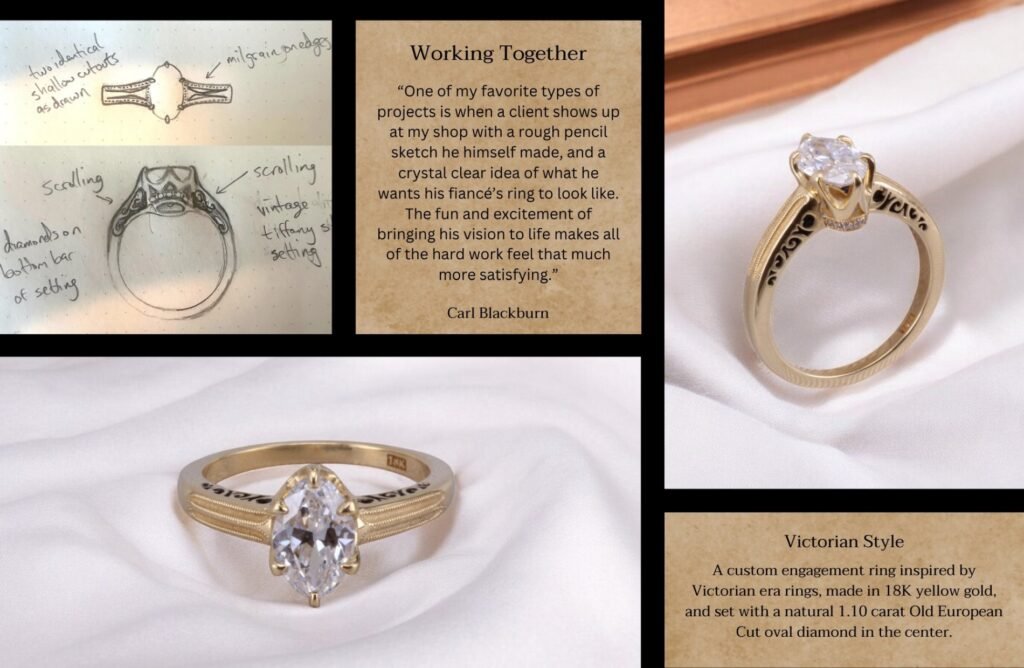
Confidence Matters More Than Origin
Here’s something Carl points out to nearly every client: how you feel about your choice shapes how you talk about it, and how you talk about it shapes how people receive it.
Buyers who choose lab-grown and understand why — who made an informed decision that actually reflects their priorities — don’t tend to explain it apologetically. They explain it plainly, sometimes enthusiastically, and it lands that way. The same goes for couples who choose natural because it genuinely means something to them, not because they felt they had to.
What tends to create discomfort isn’t the choice itself — it’s uncertainty about the choice. That’s usually solvable with information, not more debate.
How Carl Approaches This With Clients
Carl isn’t in the business of steering anyone toward one origin or the other. His job, as a custom designer working in Southern California for years, is to make sure whatever you choose is chosen with full information.
Every consultation walks through both options side by side — what the quality differences actually look like at different price points, where the ethical arguments hold up and where they’re overstated, and what your specific budget and priorities point toward.
If you want the biggest, cleanest stone your budget allows, the math on lab-grown usually makes that case for itself. If there’s real emotional or family weight behind wanting natural, that deserves equal footing in the conversation.
From there, the custom design process is where the ring actually becomes yours — regardless of what’s sitting at the center of it.
The Bottom Line
Lab-grown and natural diamonds are both, unambiguously, diamonds. Both can anchor a ring someone wears proudly for fifty years. What makes a custom engagement ring meaningful was never really about geological origin — it’s the intention behind it and the craftsmanship around it.
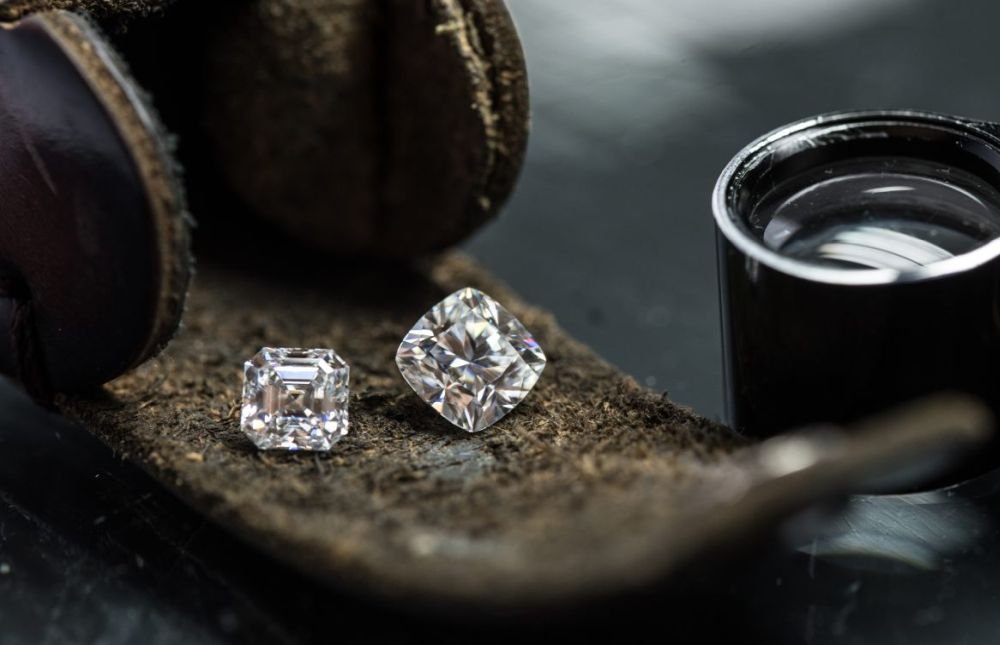
If you’re still weighing this, or just curious what a given budget could get you in either category, the most useful next step probably isn’t more reading. It’s seeing actual stones next to each other.
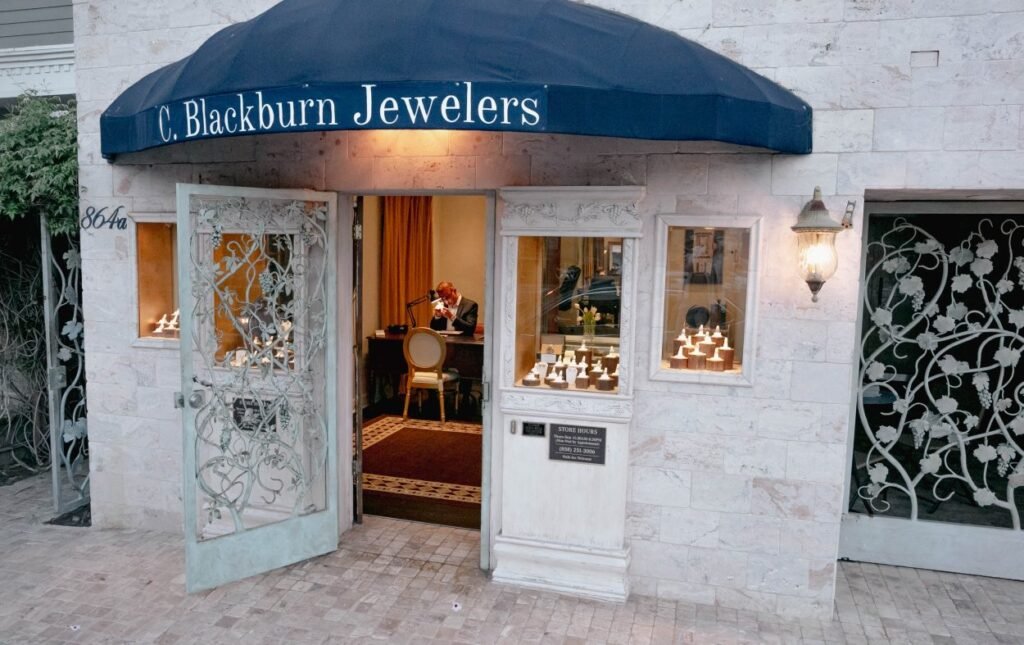
See Both Options Side by Side — With No Pressure
C. Blackburn Jewelers invites you to a private consultation in La Jolla to explore the differences between lab-grown and natural diamonds in a relaxed, pressure-free setting. Together, we’ll discuss cut quality, carat weight, beauty, value, and what truly matters to you. Ask every question you have, compare options side by side, and leave with a clearer understanding — not a sales pitch.
This is your ring. Your story. Make the choice that’s right for you.
Schedule Your Private Diamond Consultation →
Blackburn Jewelers is located in La Jolla, California. Carl Blackburn designs custom engagement rings and fine jewelry for clients throughout San Diego County and beyond.
📞 Call 858-251-3006 or text 619-723-8589.