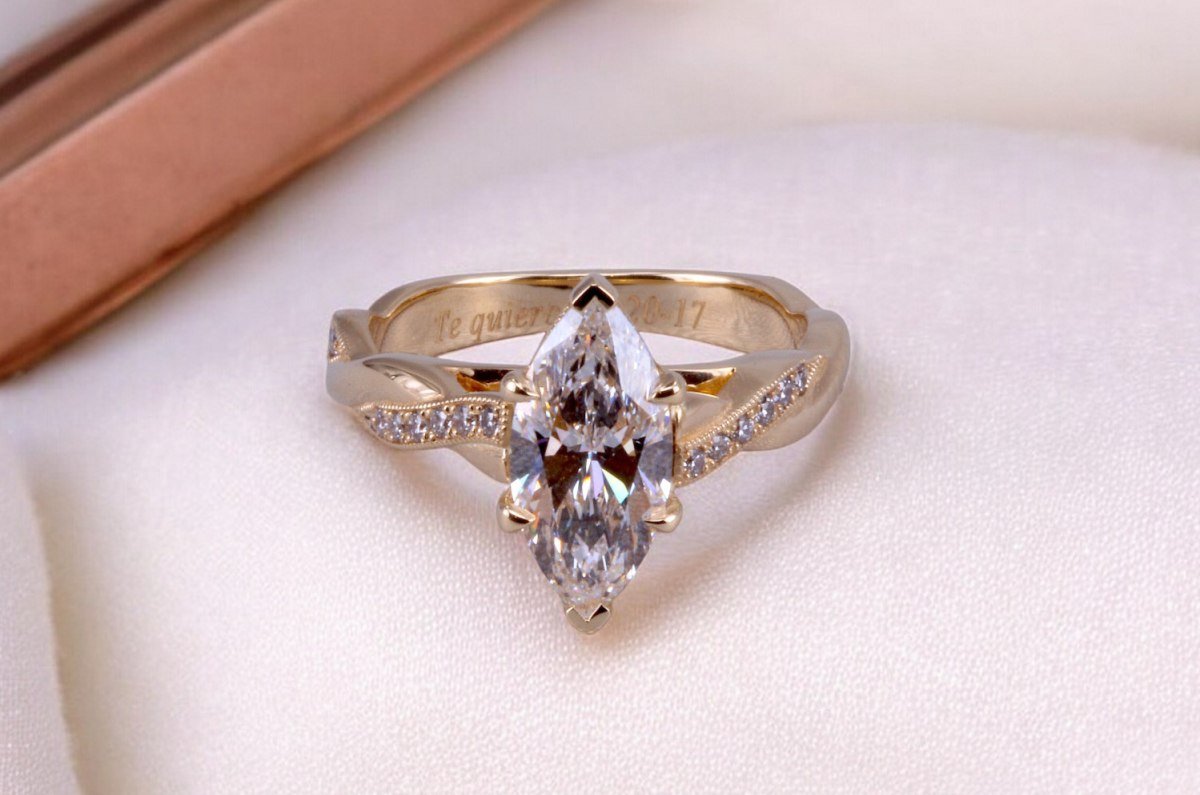
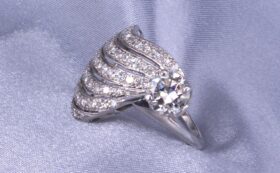
Designed by Carl Blackburn, the custom-made Marquis diamond engagement ring above features pavé set diamonds in the intertwined band.
Pavé setting is one of the most enduring techniques in fine jewelry, and La Jolla designer Carl Blackburn returns to it often in his custom engagement ring work for the shimmer it brings to a piece.
Part of its staying power is versatility: in a skilled jeweler’s hands, pavé moves easily between a classic solitaire band and a bold, modern design.
Where the Pavé Setting Comes From
Pavé takes its name from the French word for “paved” — a nod to the way tightly packed diamonds resemble a cobblestone street. The technique traces back to 18th-century Parisian workshops, where goldsmiths began experimenting with ways to set stones edge to edge and hide as much metal as possible. It caught on through the Georgian and Victorian eras, when dense, decorative detail was the fashion.
The style saw its biggest resurgence during Art Deco, in the 1920s and ’30s. Pavé’s continuous sparkle suited the era’s geometric lines and love of symmetry, and it became a favorite for cocktail rings and bold statement pieces. From there it kept adapting — bold in the Roaring Twenties, pared back for mid-century minimalism — which is part of why it still shows up constantly in engagement rings and wedding bands today.
One development worth knowing: micro pavé, the ultra-fine version using tiny diamonds under a microscope, didn’t exist until the late 1970s. Before that, diamonds small enough for micro pavé work were considered industrial-grade and sold off for cutting tools rather than jewelry.
Once automated faceting made it possible to cut those tiny stones with consistent brilliance, jewelers started setting them at a much finer scale — which is the technique you now see in delicate, densely sparkling modern pieces.
An 1800s Losenge Ring w/ Pavé Set Old Mine Cut Diamonds
How the Pavé Setting Actually Works
Pavé setting is slow, hands-on work. Small stones — called melee, typically ranging from about 0.01 to 0.20 carats each — are seated into tiny holes drilled directly into the metal. A jeweler then raises small beads or prongs of metal over each stone’s edge to hold it in place. Done well, the result reads as a single glittering surface rather than individual set stones.
Because the melee stones sit close together and share support from the surrounding metal, pavé holds up well day to day. That said, the prongs holding each stone are small by necessity, so periodic inspection matters — a professional check once or twice a year catches loose stones before they’re lost, and is far cheaper than replacing a diamond.
Styles of Pavé Rings
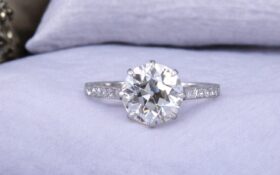
1. Classic pavé bands run diamonds the full length of the band — a clean option on their own or paired with a solitaire center stone.
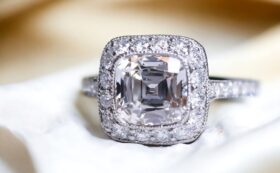
2. Halo settings surround a center stone with pavé diamonds, which visually enlarges the centerpiece. Double halos push that effect further.
3. Vintage-inspired pavé adds milgrain edging or filigree, borrowing from Art Deco and Edwardian detailing.
C. Blackburn Jewelers builds pavé into all three, from clean modern lines to more ornate, historically inspired work.
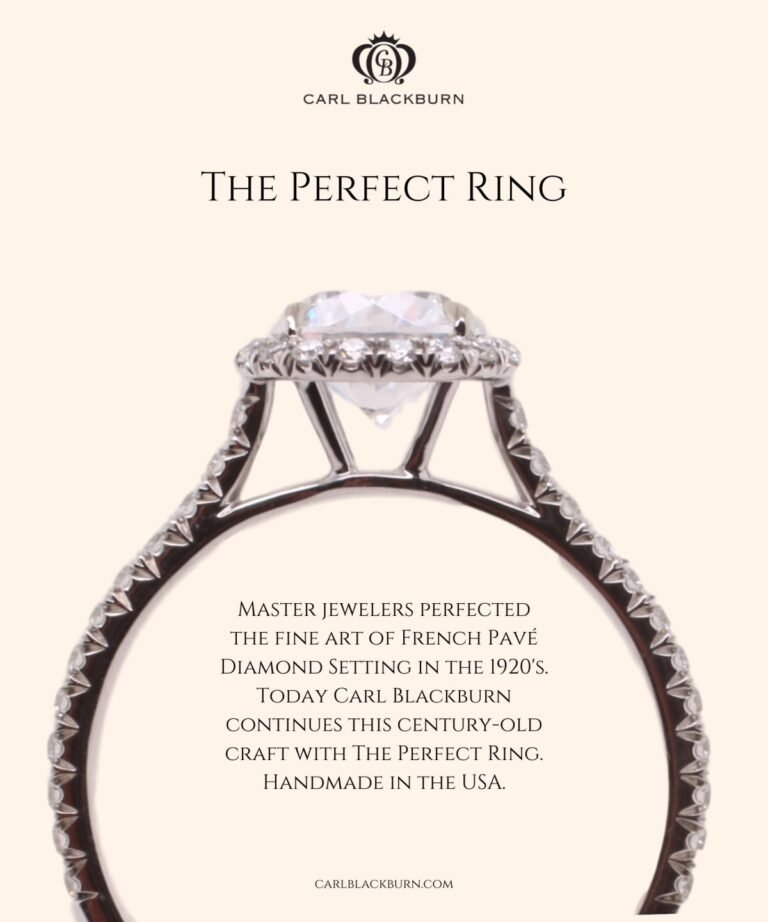
Less than 1% of all diamond rings feature the hand-cut French pave setting seen in "The Perfect Ring".
Standard Pavé vs. French Pavé
Standard pavé secures stones with small metal beads or prongs, leaving the metal mostly out of view so light moves freely across the surface. It’s a flexible, widely used technique.
French pavé (also called fishtail setting) takes it a step further: the jeweler hand-carves V-shaped grooves into the metal between each stone. That extra step exposes more of each diamond’s surface — especially from the side — and gives the ring sharper, more architectural lines. It’s also functional: stones sit slightly lower in the metal, which protects against chipping, and the added structural metal along the sides resists bending over time.
French pavé is genuinely difficult to execute — it’s why houses like Cartier, Tiffany & Co., and Harry Winston reach for it in their signature pieces. Few San Diego jewelers do it by hand. C. Blackburn Jewelers is one of them.
How Pavé Compares to Other Settings
Prong setting — holds a stone with metal claws, maximizing light entry. The standard for solitaire rings.
Bezel setting — wraps a thin metal rim around the stone. More protective, less sparkle, cleaner look — good for active wear.
Channel setting — runs stones between two metal rails, no visible prongs. Common in wedding and eternity bands, and a middle ground between pavé’s sparkle and bezel’s security.
Pavé in Modern Design
Pavé isn’t limited to diamonds — sapphires, rubies, emeralds, and colored diamonds all work in the same setting, which is part of why it keeps showing up in both traditional and contemporary pieces. It also holds up as an everyday setting: a well-executed pavé ring is sturdy enough for daily wear and doesn’t date the way trend-driven designs do.
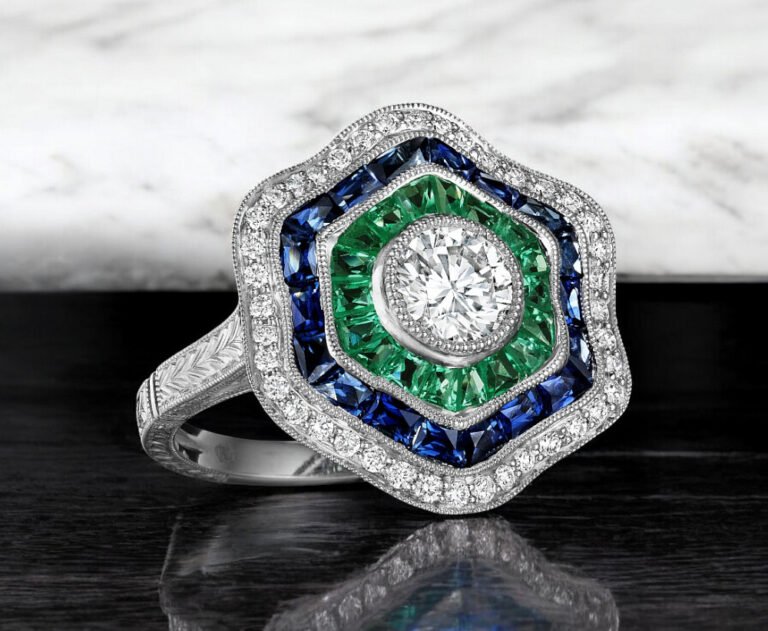
This revivalist cocktail ring by Carl Blackburn features a flowing outer frame of pavé set diamonds.
Choosing the Right Pavé Set Ring for Your Style
A few practical factors to weigh:
Metal — platinum and white gold read cool and modern; yellow and rose gold lean warmer and more vintage.
Design — classic bands suit minimalist taste; halo or vintage-detailed settings suit anyone after more sparkle or historical character.
Stone quality — melee stones are smaller and less expensive individually, but color, clarity, and cut still shape how the whole piece reads.
C. Blackburn Jewelers sources well-matched, high-quality melee for every custom piece, so the small stones complement the design rather than working against it.
Contact Carl Blackburn directly by calling 858-251-3006 or send him a text message at 619-723-8589. You can also use the contact form below to send an email.