06 Aug Designing a Hidden Gemstone Engagement Ring
Most engagement rings reveal themselves at a glance. The center diamond sets the shape, the setting shapes the silhouette, and any accent stones sit where they’ll catch the most light from above.
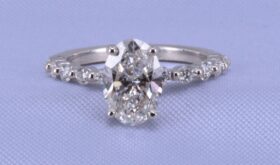
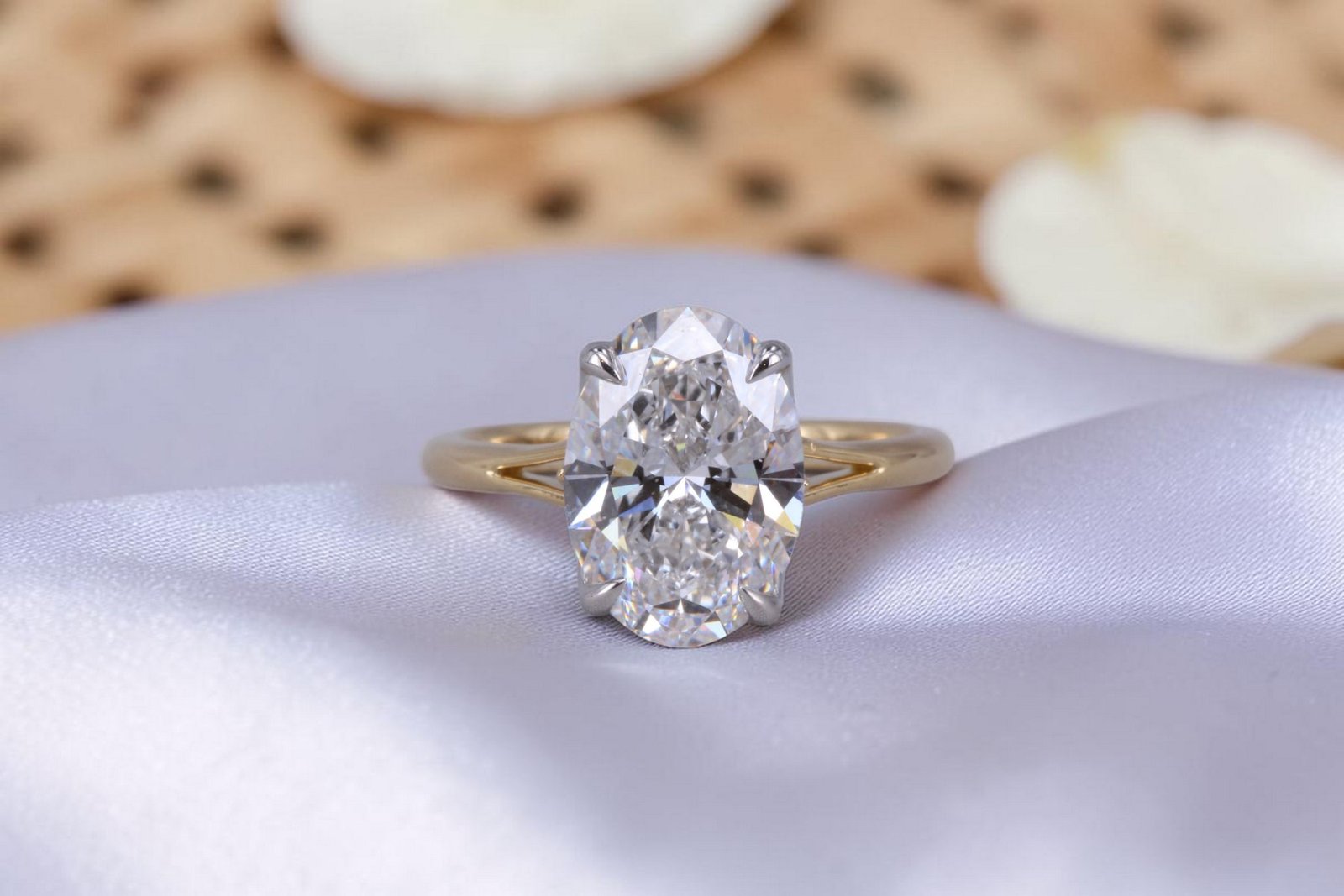
The custom ring Carl Blackburn created for Hanna and Jack breaks that pattern. From the top, it looks almost austere: a 4.06-carat oval brilliant-cut lab-grown diamond on a slender 18K yellow gold band, no halo, no pavé, nothing competing for attention.
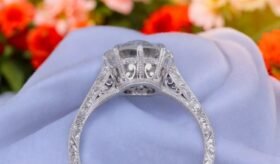
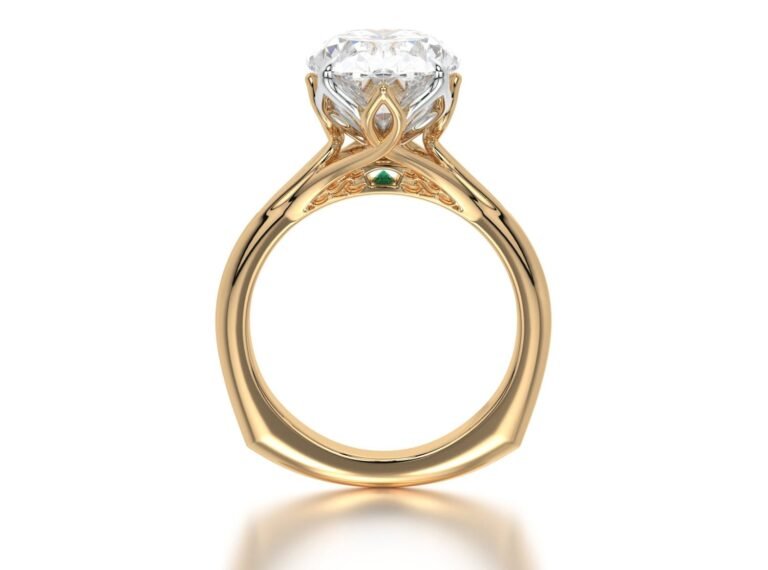
Turn it toward you, though, and the story changes. Beneath the diamond, inside the under-gallery, sits a natural alexandrite — Jack’s birthstone — visible through a small window at the front of the ring. Engraved waves in the yellow gold curl toward it from both sides, so the green stone reads like an island surrounded by approaching waves. Its meaning lives partly in that closer view, and partly in the simple fact that Hanna knows it’s there, whether anyone else ever sees it or not.
What Is a Hidden Gemstone Engagement Ring?
A hidden gemstone is set somewhere other than the obvious top-down view — beneath the center stone, inside the band, along the inner shank, or behind an opening in the gallery. Rather than adding visible brilliance, it usually carries something more personal: a birth month, an anniversary, a family connection, a memory shared between two people.
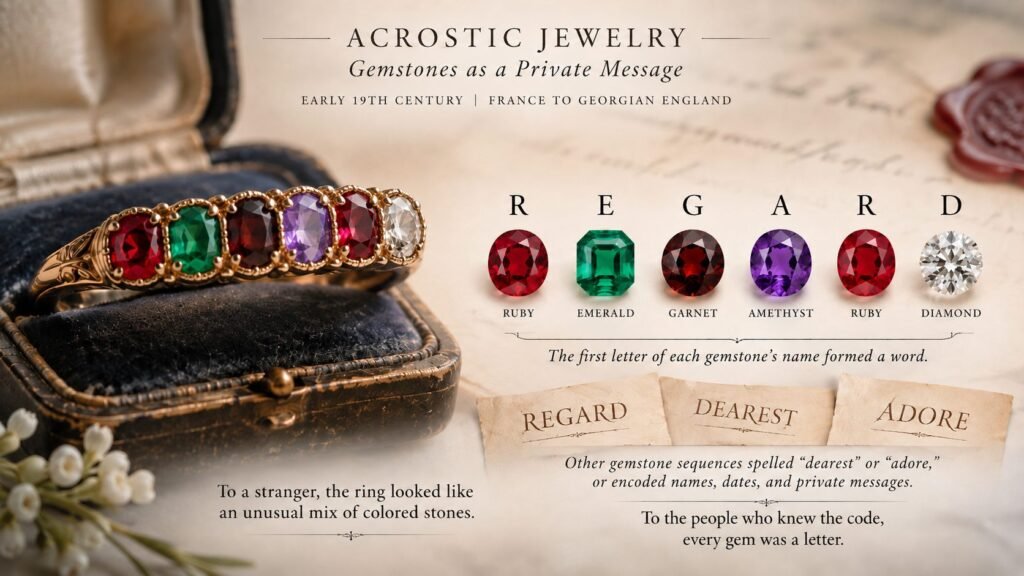
The idea of a gemstone carrying meaning beyond its brilliance isn’t new. In the early nineteenth century, acrostic jewelry moved from France into Georgian England, where “regard” rings and other coded pieces became popular.
A ruby, emerald, garnet, amethyst, ruby, and diamond spelled R-E-G-A-R-D. Other combinations spelled “dearest” or “adore,” or encoded names, dates, and private messages. To a stranger, the ring just looked like an unusual mix of colored stones. To the people who knew the code, every gem was a letter.
Hanna and Jack’s custom engagement ring works on a similar principle, translated into a single stone instead of a sequence. The alexandrite isn’t there for its brilliance — it’s there because it’s Jack’s birthstone, chosen for what it represents rather than how it catches light.
Where a “regard” ring spelled its meaning out in plain sight for anyone who knew how to read it, Carl kept this one quieter still: built into the gallery beneath the diamond, visible only once the ring is turned. Carl also went a step further than tucking the stone out of sight — he built the gold around it so the alexandrite anchors a small scene rather than just hiding behind the diamond, its green color and position suggesting an island, the engraved lines around it suggesting waves.
Two Stones, Two Roles
The oval diamond is the outward-facing part of the design — it gives the ring its scale and brilliance and commands the first glance. The alexandrite is the inward part. It represents Jack, and it sits directly beneath the stone that represents the marriage itself.
One stone is dominant and visible, the other intimate and partly concealed, and neither reads as an afterthought — Carl gave the alexandrite its own setting rather than squeezing it into leftover space. Hanna doesn’t need to be looking at it for it to matter. Its meaning does not depend on her seeing it; knowing it is there is enough.
The Alexandrite Island
Set low in the yellow gold and visible through the small front-facing window, the alexandrite’s green color separates it immediately from the metal around it. Its placement and the engraved waves curling in from both sides turn a structural section of the ring into a miniature ocean — the birthstone as island, the goldwork as the world around it. The window, the engraving, the color, and the metal all do this work together; none of it depends on the gemstone alone.
The Oval Diamond
At the center of the engagement ring sits the 4.06-carat lab-grown oval brilliant-cut diamond. The oval shape gives it length and movement while its rounded ends keep the scale soft; the brilliant cut throws light in wide, active flashes.
Carl skipped the halo and any visible accent stones, letting the outline stay uninterrupted from above — restraint that matters precisely because of how much is happening beneath it. A heavily decorated top view would have competed with the gallery instead of setting it up. From above, the ring is direct. From the side, it opens up, and the diamond’s simplicity is what makes room for the alexandrite’s intimacy.
Lotus Petals in Platinum
Four platinum prongs hold the center stone, each shaped as a lotus petal — doing double duty as structural support and floral imagery. Platinum suits the job because it recedes visually against the diamond; from above, the prongs blend into the stone’s white light rather than interrupting it with warm flashes.
From below, the same prongs read differently, spreading into petal-like forms just above the island and waves. They aren’t decoration wrapped around a basket — they’re the basket itself, holding the diamond and carrying the floral motif with the same four pieces of metal.
Yellow Gold and Platinum
The 18K yellow gold forms the band, shoulders, engraved under-gallery, and much of the flowing structure beneath the center stone, giving the ring warmth where the metal curves and crosses. Platinum stays concentrated near the diamond, where its cooler tone lets it merge with the stone rather than compete with it.
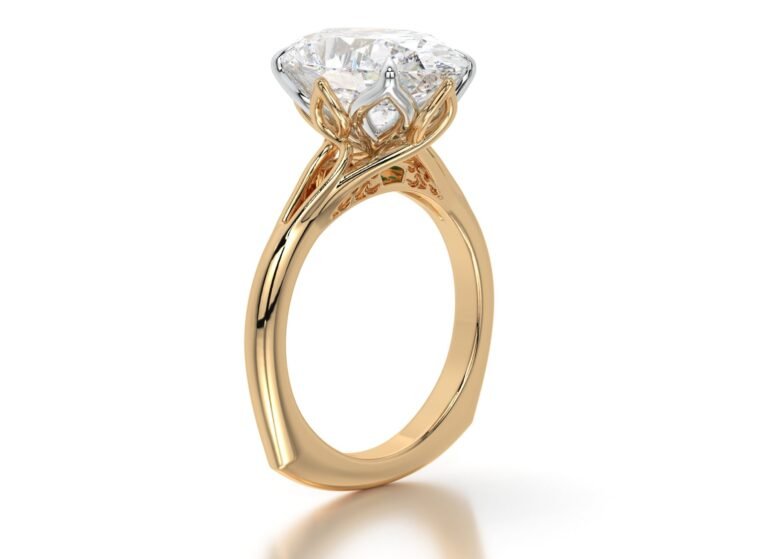
Seen from the side, the split is clearest: platinum appears to lift and hold the diamond, while yellow gold gathers beneath it into a warmer, more intricate world — platinum tied to the stone and its petals, gold tied to the architecture and symbolism underneath.
Cathedral Shoulders
The yellow gold shoulders of the engagement ring rise toward the diamond in a cathedral profile, but not in a straight line — they curve, cross, and divide on their way into the gallery, closer to ribbon or plant stems than a conventional mounting. That openness isn’t just stylistic: without it, the alexandrite and engraved waves would be enclosed or visible only from underneath. The gaps between gold and platinum let light through and give the front-facing window room to work.
Waves Engraved Into Gold
The engraving around the alexandrite isn’t decorative texture so much as motion — lines that bend and curl like water approaching the stone from both sides, small enough to stay contained within the under-gallery but clear enough to read up close. Because it sits beneath the diamond, none of it disturbs the clean solitaire look from above; it belongs entirely to the closer, more personal view.
The Window
The small opening at the front of the under-gallery is one of the more deliberate choices in the ring. A gemstone hidden directly beneath a center diamond can easily end up visible only from the bottom or one narrow angle — private, but disconnected from the rest of the design.
The window fixes that. Seen from the front, the alexandrite appears centered beneath the diamond, framed by the waves and rising gold — not just concealed, but given a vantage point of its own. The stone stays hidden from the ordinary top view, preserving the solitaire’s restraint, while still giving anyone who looks closer a specific angle from which the whole scene comes into focus.
Considered From Every Angle
From above, the engagement ring reads as a clean solitaire: one oval diamond, four restrained prongs, a polished band. Turn it, and the yellow gold shoulders begin crossing beneath the setting; from the side, the lotus structure comes into view; from the front, the under-gallery reveals the alexandrite, its window, and the waves around it.
From the rear, the band resolves into a subtle Euro shank, its flatter base helping stabilize the large oval setting while preserving the ring’s clean profile.
Brilliance first, structure second, personal symbolism last — that’s what a hidden gemstone can do that a visible accent stone can’t. The ring stays visually restrained without losing anything personal. The oval diamond shaped the scale of the mounting, the lotus petals became both prong and ornament, the cathedral shoulders opened the space that made the window possible, and the window turned the alexandrite from a concealed birthstone into the center of the scene. Each choice set up the next.
The diamond will always be noticed first, and that’s as it should be — its job is presence. The alexandrite’s job is quieter: keeping Jack beneath the center of the ring, known and carried by Hanna even when no one else knows to look.
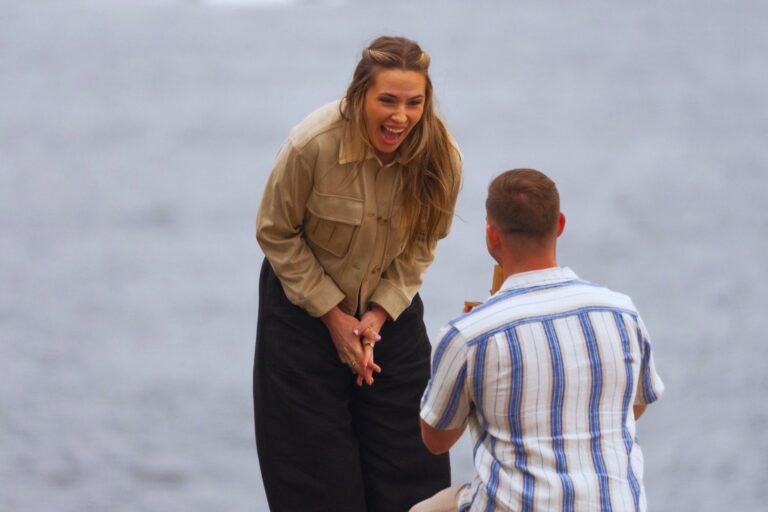
Create a custom engagement ring with meaning beneath the surface. A custom design can hold more than what’s visible from above — a hidden birthstone, an engraved symbol, a private gemstone, or a gallery built around something only two people understand. Carl Blackburn can turn that story into a ring made specifically for it.
Contact C. Blackburn Jewelers in La Jolla, San Diego to start designing yours.
📞 Call 858-251-3006 or text 619-723-8589.